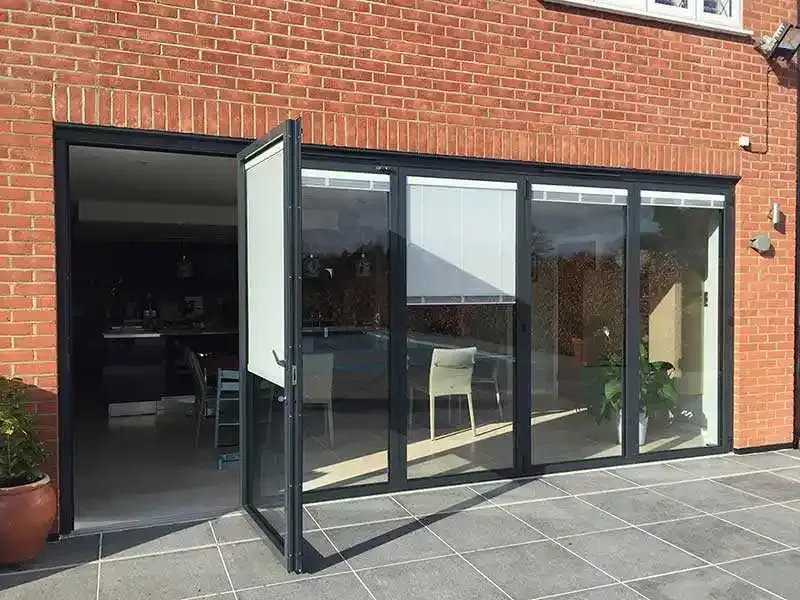
Choosing an entry door means weighing strength, maintenance, and long-term appearance. Aluminum, steel, and wood each have a place, but they behave very differently over time. This guide compares aluminum vs steel entry doors in detail, then looks at aluminum vs wood front door options so you can match the material to the climate, building type, and design intent.
How the Three Materials Compare
Steel doors are known for initial strength. They resist forced entry well when the core and frame are solid. However, steel can rust if the paint is scratched or if moisture gets trapped at joints. Coastal air, road salt, and high humidity all work against steel over time. Aluminum does not rust. The thickened profiles used in WANJIA Hiseng aluminum entrance doors are corrosion-resistant and impact-resistant, which makes them a practical choice for exposed entrances and buildings near the ocean.
Wood doors offer a traditional look that many homeowners want. But wood expands and contracts with humidity, can crack or warp, and needs repainting or resealing every few years. Aluminum exterior doors hold their dimensions and finish with far less upkeep. A fluorocarbon coating or wood-grain transfer gives you the appearance of painted wood or natural grain without the maintenance cycle.
| Factor | Aluminum | Steel | Wood |
|---|---|---|---|
| Rust and corrosion | High resistance | Can rust if coating is damaged | No rust, but can rot |
| Dimensional stability | Stable in heat and humidity | Stable, but thermal bridging possible | Expands and contracts |
| Maintenance | Low, occasional cleaning | Moderate, touch up scratches | High, repaint or reseal |
| Design flexibility | Wide range of profiles and finishes | Limited by stamping | Good for traditional looks |
Aluminum vs Steel Entry Doors: Strength and Security
Steel is often assumed to be the strongest option. In reality, the door's construction matters more than the base metal. A thin steel skin over a weak core can dent easily. A well-built aluminum door with thickened profiles and a multi-point lock can perform just as well for daily security. WANJIA Hiseng aluminum entry doors use multi-point locks and multiple sealing strips. The lock engages at several points along the frame, not just at the latch, which helps resist prying and keeps the door tight against the weather.
Impact resistance is another factor. Aluminum profiles absorb impact without cracking. Steel can dent, and once dented, the damage is visible and hard to repair. Wood can split or show deep scratches. For high-traffic entrances, apartments, or commercial spaces, aluminum exterior doors tend to look better longer.
Thermal Performance and Condensation
Metal doors conduct heat. That is true for both steel and aluminum. The difference comes from the thermal break. WANJIA Hiseng aluminum entrance doors are built with a thermal break to reduce heat transfer. The K80 large entrance aluminum double casement doors use a 35.3 mm thermal break and can achieve a Uw value of 1.4. That is a meaningful number for cold climates and for buildings that need to meet energy codes. Steel doors without a proper thermal break can feel cold to the touch and may sweat in humid weather. Aluminum with a thermal break stays warmer on the interior face and reduces condensation risk.
Wood is naturally less conductive, but it is not airtight unless the frame and weatherstripping are well designed. A wood door with poor seals will leak air just like any other door. The overall performance depends on the whole assembly, not just the slab material.
Aluminum vs Wood Front Door: Appearance and Customization
Wood has a warmth that is hard to copy. If you want a stained wood grain with visible texture, a solid wood door is the direct choice. But aluminum can be finished with a wood-grain transfer that mimics the look of timber while keeping the aluminum structure. This gives you the visual warmth of wood with the weather resistance of aluminum. Fluorocarbon coating and anodizing are also available for solid colors and metallic finishes.
Aluminum is easier to form into narrow sightlines and large glass areas. If you want a pivot door with a full-height glass panel, aluminum is the better frame material. WANJIA Hiseng pivot doors use an aluminum frame to support large glass panels without the weight and maintenance of a solid wood pivot. For double doors, the double doors page shows K80 large entrance aluminum double casement doors that can span wide openings while keeping the frames slim.
Wood front doors are often limited to standard panel designs. Custom shapes and oversized openings are harder and more expensive in wood. Aluminum extrusion allows custom widths and heights, including sidelight combinations and full-open configurations. That flexibility matters when you are working on a modern home, a retail entrance, or a multi-family building with non-standard openings.
Maintenance and Long-Term Cost
Steel doors need regular inspection for scratches. Any break in the paint exposes the steel to moisture and starts the rust cycle. In coastal areas, this can happen within a year or two. Wood doors need repainting or resealing every few years, and they can rot if water gets behind the finish. Aluminum exterior doors do not rust or rot. The surface treatments used by WANJIA Hiseng, including fluorocarbon coating and anodizing, are designed to hold up under UV exposure and rain without repainting.
The initial cost of aluminum is often higher than steel, but the maintenance savings and longer service life can offset that. For builders and dealers, aluminum also reduces callbacks related to rust, warping, or finish failure. That is a real advantage when you are supplying multiple units across different climates.
Choosing the Right Door for Your Project
For a coastal home, an aluminum entrance door with a thermal break and multi-point lock is a strong candidate. For a modern commercial storefront, aluminum's slim profiles and large glass options are hard to beat. For a historic renovation where wood grain is essential, a wood door or an aluminum door with wood-grain transfer may be the answer. Steel can work for budget-driven projects where the door is protected by a deep overhang and the client accepts the maintenance.
WANJIA Hiseng manufactures aluminum entrance doors in single, double, combination with sidelights, pivot, and full-open configurations. The company was founded in 2012 and operates a factory that covers an area of 322,917 sq.ft. Products are sold worldwide, with a strong focus on the North American market. If you are comparing aluminum vs steel entry doors for a specific building, the best way to decide is to get a quote with your dimensions and finish requirements. The team can provide a quote within 3 hours after receiving project details, and lead time is usually 25-30 business days depending on the design and order volume.
For more details on the product range, see the aluminum exterior doors page or the residential applications page.